Alltesta HPLC Method for Analysis of Epiberberine and Berberine on Primesep B Column
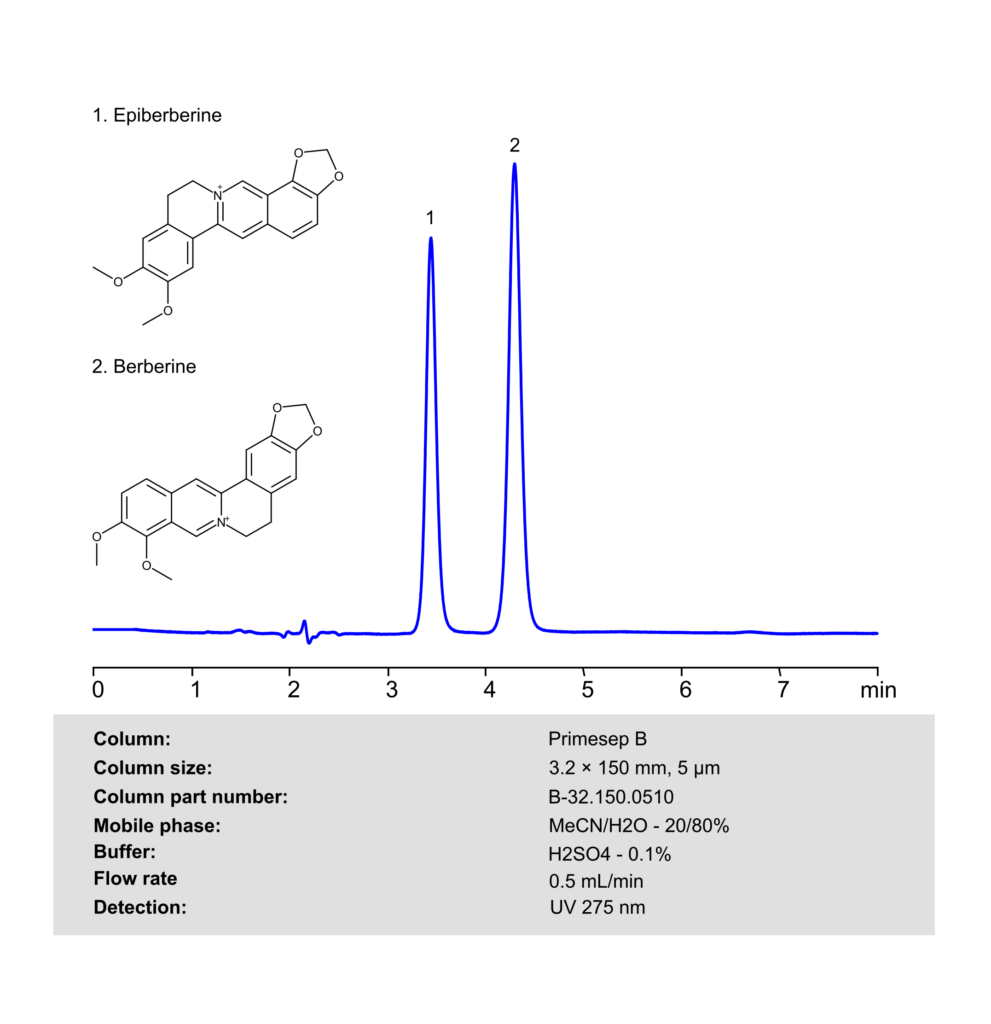
Epiberberine and Berberine are both natural alkaloids found in various medicinal plants, particularly in the Berberis species. They share a similar chemical structure and biological properties but have distinct effects.
Berberine is well-known for its antimicrobial, anti-inflammatory, and metabolic benefits, including blood sugar regulation and cholesterol reduction. It is commonly used for diabetes, gut health, and cardiovascular support.
Epiberberine is a structural isomer of berberine and is believed to enhance its bioavailability and metabolic effects. Research suggests it may contribute to glucose metabolism and lipid regulation, making it a potential complementary compound in berberine-based supplements.
Epiberberine and berberine can be retained and analyzed using a Primesep B mixed-mode stationary phase column. The analysis employs an isocratic method with a simple mobile phase composed of water, acetonitrile (MeCN), and sulfuric acid as a buffer. Detection is performed using UV at 275 nm.
You can view examples of chromatograms obtained using the Allesta instrument and Sielc columns by clicking here .
Methodenparameter
| Column | Primesep B, 3.2 x 150 mm, 5 µm, 100 Å, dual ended |
|---|---|
| Mobile Phase | MeCN/H2O – 20/80% |
| Buffer | H2SO4 -0.1% |
| Flow Rate | 0.5 mL/min |
| Detection | UV 275 nm |