HPLC Separation of Glufosinate, Glyphosate and Glyphosine on Newcrom B Column
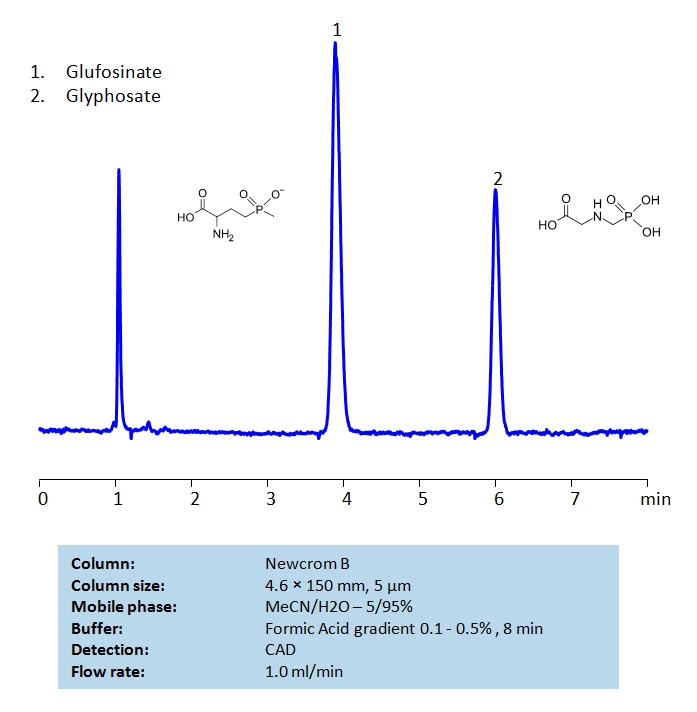
High Performance Liquid Chromatography (HPLC) Method for Analysis of Glufosinate , Glyphosate , Glyphosine .
Glufosinate is a naturally occurring herbicide. It is produced by Streptomyces soil bacteria and is used for weed control against broadleaf and grass weeds. It’s chemical formula is C5H12NO4P . The herbicide works through inhibiting glutamine synthetase, which is a key enzyme in plant metabolism. It is a sky and eye irritant, therefore it is encouraged to wear protective gear when handling Glufosinate.
Glyphosate is a broad-spectrum herbicide. It works through inhibiting the plant enzyme 5-enolpyruvylshikimate-3-phosphate synthase. The enzyme is essential for producing amino acids within the plant. Glyphosate is used across agriculture and forestry, as well as rare aquatic environments. It’s chemical formula is C3H8NO5P .
Glyphosine is a synthetic plant growth regulator. It is primarily used to hasten maturity of sugarcane., but at high levels it can also be used as herbicide due to it’s ability to cause chlorosis in emerging leaves. It’s chemical formula is C4H11NO8P2 .
Glufosinate , Glyphosate , Glyphosine can be retained and analyzed using the Newcrom B stationary phase column. The analysis utilizes an isocratic method with a simple mobile phase consisting of water and acetonitrile (MeCN) with a formic acid buffer. Detection is performed using UV.
Methodenparameter
| Column | Newcrom B, 4.6 x 150 mm, 5 µm, 100 Å, dual ended |
|---|---|
| Mobile Phase | MeCN/H2O – 5/95% |
| Buffer | Formic Acid Gradient |
| Flow Rate | 1.0 mL/min |
| Detection | CAD |