Effect of pH on Separation of Glyphosate and Ethylphosphonic Acid
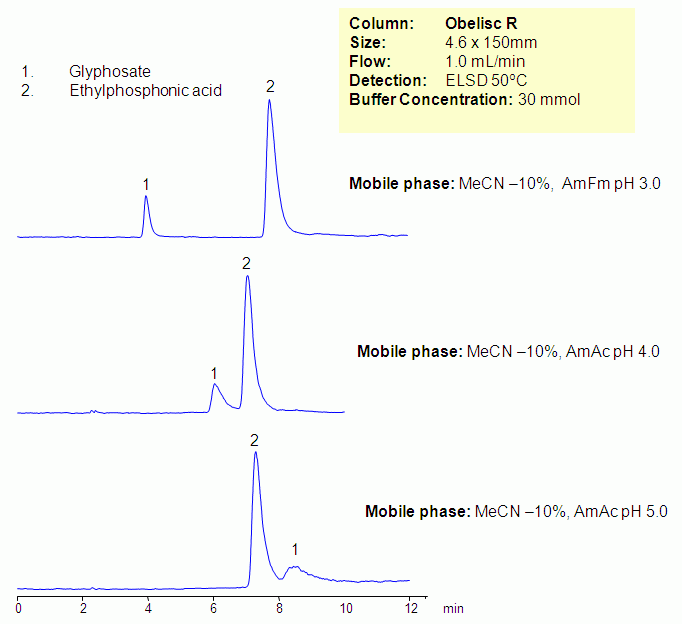
Glyphosate is broad spectrum herbicide to kill weeds. Presence of glyphosate in water, fruits and veggies is regulated. Alkylphosphonic acids are decomposition byproducts of chemical warfare agents. Analysis of phosphonic acid in water is regulated by Environmental Protection Agency (EPA). All phosphonic acids are polar acidic compounds. Method was developed for glyphosate and ethylphosphonic acid. Both compounds are retained by ion-exchange mechanism. Method is compatible with LC/MS and can be used for analysis of glyphosate and alkylphosphonic acids in various matrices.
SIELC has developed the Obelisc™ columns, which are mixed-mode and utilize Liquid Separation Cell technology (LiSC™). These cost-effective columns are the first of their kind to be commercially available and can replace multiple HPLC columns, including reversed-phase (RP), AQ-type reversed-phase, polar-embedded group RP columns, normal-phase, cation-exchange, anion-exchange, ion-exclusion, and HILIC (Hydrophilic Interaction Liquid Chromatography) columns. By controlling just three orthogonal method parameters - buffer concentration, buffer pH, and organic modifier concentration - users can adjust the column properties with pinpoint precision to separate complex mixtures.
Methodenparameter
| Column | Obelisc R, 4.6×150 mm, 5 µm, 100 Å |
|---|---|
| Mobile Phase | MeCN – 10% |
| Buffer | AmAc |
| Flow Rate | 1.0 mL/min |
| Detection | ELSD50C |