HPLC Method for Separation of Bile acids (Methyl cholate, Cholic acid, Deoxycholic acid, Chenodeoxycholic acid) on Primesep B Column
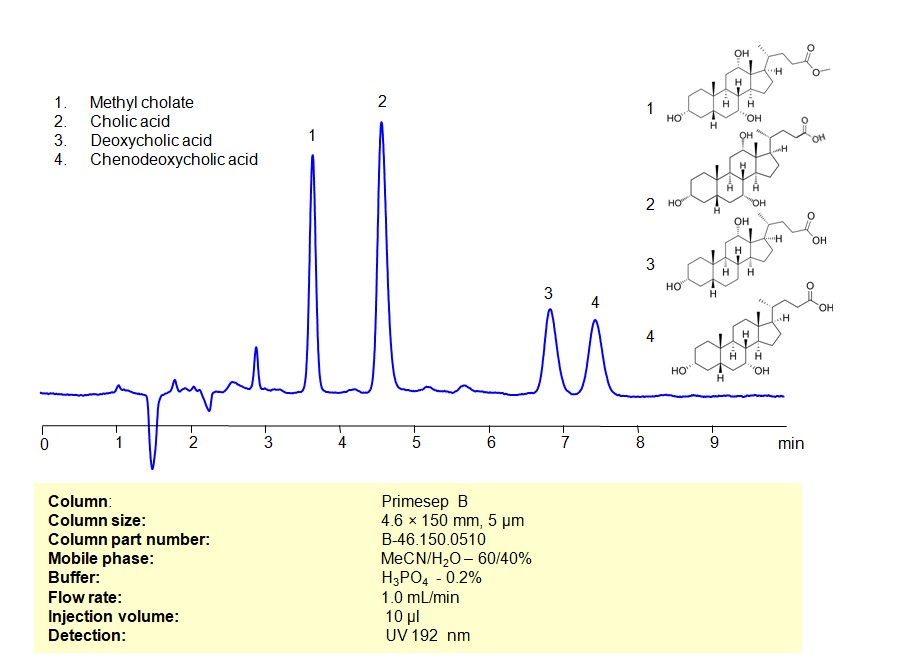
Bile acids are a class of amphipathic molecules derived from cholesterol that play a crucial role in the digestion and absorption of dietary fats. They are synthesized in the liver and released into the small intestine during digestion.
These bile acids are part of the bile acid pool, which undergoes enterohepatic circulation—being released into the small intestine, reabsorbed in the terminal ileum, and returned to the liver. Bile acids also play a role in cholesterol metabolism and act as signaling molecules.
Their chemical structures, amphipathic nature, and interactions with lipids are essential for their physiological functions in the digestive process. The balance of bile acids in the body is crucial for proper digestion and absorption of dietary fats.
Bile acids can be retained, separated, and analyzed using a Primesep B mixed-mode stationary phase column. The analysis utilizes an isocratic method with a simple mobile phase consisting of water, acetonitrile (MeCN), and sulfuric acid as a buffer. Detection is achieved using UV at 192 nm
Methodenparameter
| Column | Primesep B, 4.6 x 150 mm, 5 µm, 100 Å, dual ended |
|---|---|
| Mobile Phase | MeCN/H2O – 60/40% |
| Buffer | H3PO4 -0.2% |
| Flow Rate | 1.0 mL/min |
| Detection | UV 192 nm |
| Injection Volume | 10 µl |