HPLC Method for Analysis of Creatine and Creatinine in Milk on Newcrom AH Column
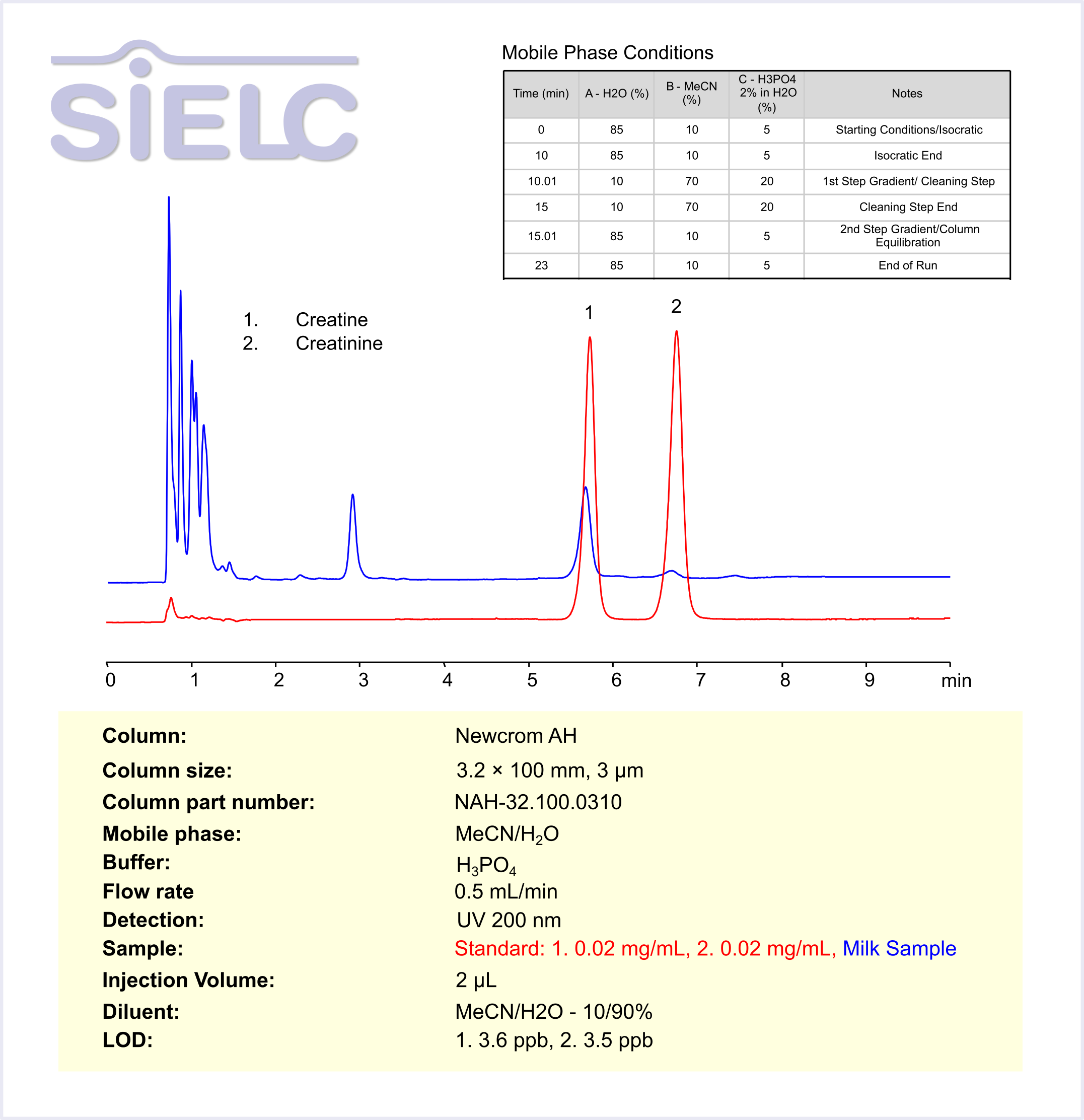
Creatine is a naturally occurring compound found in muscles and is used to produce energy during high-intensity exercise. It is synthesized in the body from amino acids and stored in muscles for quick energy release. Creatinine, on the other hand, is a waste product produced from the breakdown of creatine. It is filtered by the kidneys and excreted in urine. The measurement of creatinine levels in the blood and urine is commonly used to assess kidney function, as high levels may indicate impaired kidney function or other health issues. Creatine and creatinine are naturally occurring compounds found in milk, originating from muscle metabolism and dietary sources in lactating animals. While creatine contributes to energy metabolism, creatinine serves as a breakdown product and its levels in milk can be influenced by the animal’s physiological state and kidney function.
Creatine and Creatinine can be analyzed and separated using a Newcrom AH mixed-mode stationary phase column. The analysis utilizes a step gradient method with a simple mobile phase consisting of water, acetonitrile (MeCN), and phosphoric acid as a buffer. Detection is carried out using UV.
Methodenparameter
| Column | Newcrom AH, 3.2 x 100 mm, 3 µm, 100 Å, dual ended |
|---|---|
| Mobile Phase | MeCN/H2O |
| Buffer | H3PO4 |
| Flow Rate | 0.5 mL/min |
| Detection | UV 200 nm |
| Sample | Standard: 1. 0.02 mg/mL, 2. 0.02 mg/mL. Milk Sample |
| Injection Volume | 2 µl |