HPLC Method for Analysis of Insulin on BIST™B+ Column
https://sielc.com/hplc-method-for-analysis-of-insulinChromatogram
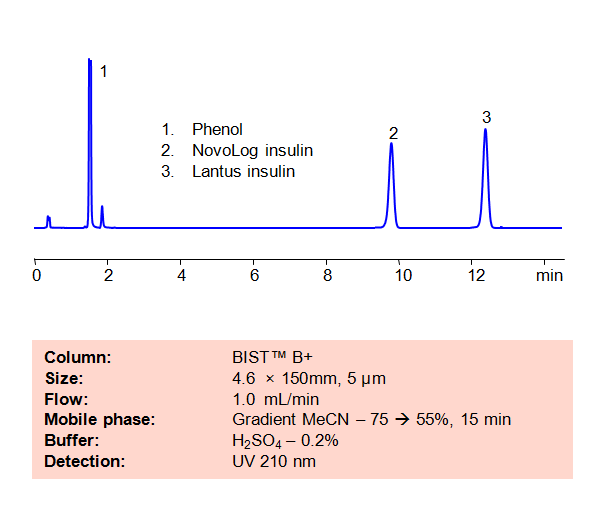
Description
· High Performance Liquid Chromatography (HPLC) Method for Analysis of Insulin.
Insulin is an anabolic peptide hormone naturally produced in the pancreas that regulates the body’s glucose levels. It is also synthesized as a treatment drug for those with Diabetes who can’t regulate their own blood sugar levels naturally. Two well-known forms of synthetic insulin are NovoLog and Lantus. NovoLog is a fast-acting version of insulin and can be used by both Type-1 and Type-2 Diabetes patients, whereas Lantus is a long-acting version of insulin that is primarily used by Type-2 Diabetes patients (and by Type-1 patients under the age of 6).
Using SIELC’s newly introduced BIST™ method, these two forms of insulin can be separated and retained on a positively-charged anion-exchange BIST™B column. There are two keys to this retention method: 1) a multi-charged, negative buffer, such as Sulfuric acid (H2SO4), which acts as a bridge, linking the positively-charged amine analytes to the positively-charged column surface and 2) a mobile phase consisting mostly of organic solvent to minimize the formation of a solvation layer around the charged analytes. This method actually utilizes a gradient that lowers the MeCN concentration over time; this reduces the retention effects on the insulin analytes, allowing for quicker elution times while still maintaining clear selectivity and separation. Using this new and unique analysis method, two different manu can be retained and UV detected at 210 nm.
Method Parameters
| Mobile Phase | MeCN Gradient |
|---|---|
| Buffer | H2SO4 – 0.2% |
| Flow Rate | 1.0 ml/min |
| Detection | UV 210 nm |
| Class of Compounds | Polymer, Protein |
| Analyzing Compounds | Insulin,Insulin, neutral |