HPLC Method for Analysis of Butylated Hydroxytoluene (BHT) in Solid Deodorant on Primesep B Column
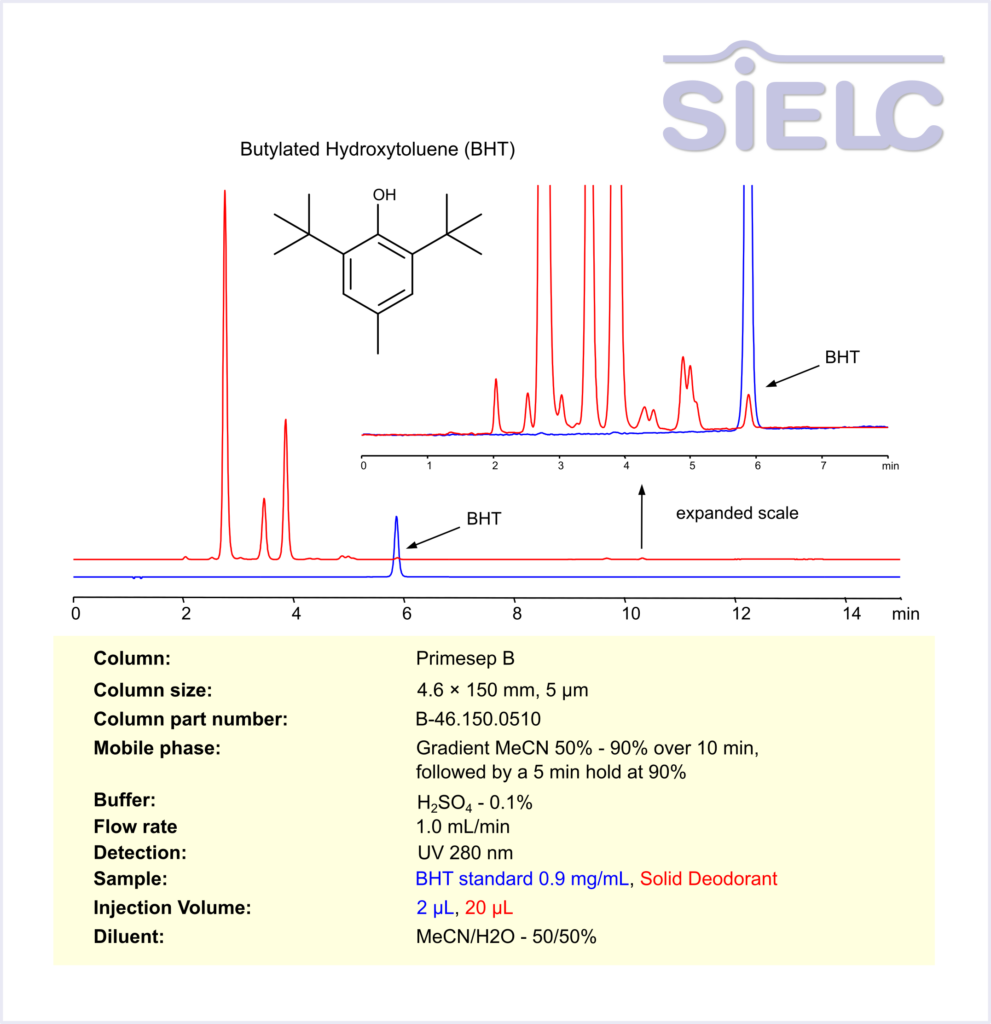
Solid Deodorant Sample Preparation:
A2.0 g portion of the solid deodorant sample was accurately weighed and placed into a grinder. Next, 6 mL of acetonitrile (MeCN) was added, and the mixture was thoroughly homogenized. The resulting solution was filtered using a syringe filter to remove any insoluble materials.
The clear filtrate was then diluted 1:1 (v/v) with water to achieve the appropriate solvent composition for HPLC analysis. To ensure complete removal of particulates, the diluted solution underwent a second filtration using a syringe filter (PVDF0.2 µm), yielding a final sample ready for chromatographic analysis.
Butylated Hydroxytoluene (BHT) is a synthetic antioxidant used to prevent oxidation in food, cosmetics, and industrial products. It helps maintain the freshness of oils, fats, and processed foods by inhibiting rancidity. BHT is also found in cosmetics and pharmaceuticals to protect against oxidative degradation.
While effective in preserving product quality, concerns about its potential health risks with long-term use have led to ongoing research and regulatory reviews.
Butylated hydroxytoluene can be retained and analyzed using the Primesep B stationary phase column. The analysis utilizes a gradient method with a simple mobile phase consisting of water, acetonitrile (MeCN), and sulfuric acid. Detection is performed using UV at 280 nm.
Methodenparameter
| Column | Primesep B, 4.6 x 150 mm, 5 µm, 100 Å, dual ended |
|---|---|
| Mobile Phase | Gradient MeCN50 – 90% over 10 min, followed by a 5 min hold at 90% |
| Buffer | H2SO4 – 0.1% |
| Flow Rate | 1.0 mL/min |
| Detection | UV 280 nm |