HPLC Method for Analysis of Bupivacaine on Primesep B Column
Separation type: Liquid Chromatography Mixed-mode
Bupivacaine is a type of medication known as a local anesthetic. It works by blocking nerve impulses that send pain signals to your brain, numbing the area and reducing discomfort. This drug is most commonly used during surgical procedures, labor and delivery, or dental procedures. Bupivacaine is often injected into the area of the body where pain relief is needed.
Bupivacaine comes in various forms, including an injectable solution and a topical patch. It has a longer duration of action compared to some other local anesthetics, making it particularly useful for procedures that may require prolonged anesthesia or postoperative pain management.
As with any medication, bupivacaine can have side effects and potential risks. These can include low blood pressure (hypotension), irregular heart rhythms (arrhythmias), and in rare cases, severe reactions like seizures or cardiac arrest. Therefore, it’s crucial to only use bupivacaine under the direct supervision of a healthcare provider.
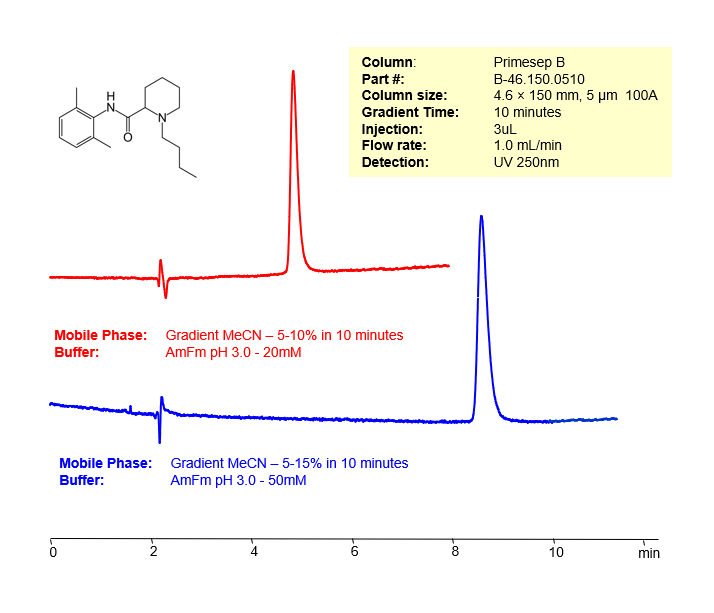
Bupivacaine can be analyzed on a reverse-phase Primesep B, 4.6 x 150 mm, 5 µm, 100 Å, dual ended column with a mobile phase consisting of water, Acetonitrile and Ammonium formate as a buffer modifier. This analysis method can be UV detected at 250 nm.
Methodenparameter
| Column | Primesep B, 4.6 x 150 mm, 5 µm, 100 Å, dual ended |
|---|---|
| Mobile Phase | MeCN gradient |
| Buffer | AmFm pH 3.0 |
| Flow Rate | 1.0 mL/min |
| Detection | UV 250 nm |