HPLC Method for Analysis of Thiabendazole on Primesep 100 Column
https://sielc.com/hplc-method-thiabendazoleChromatogram
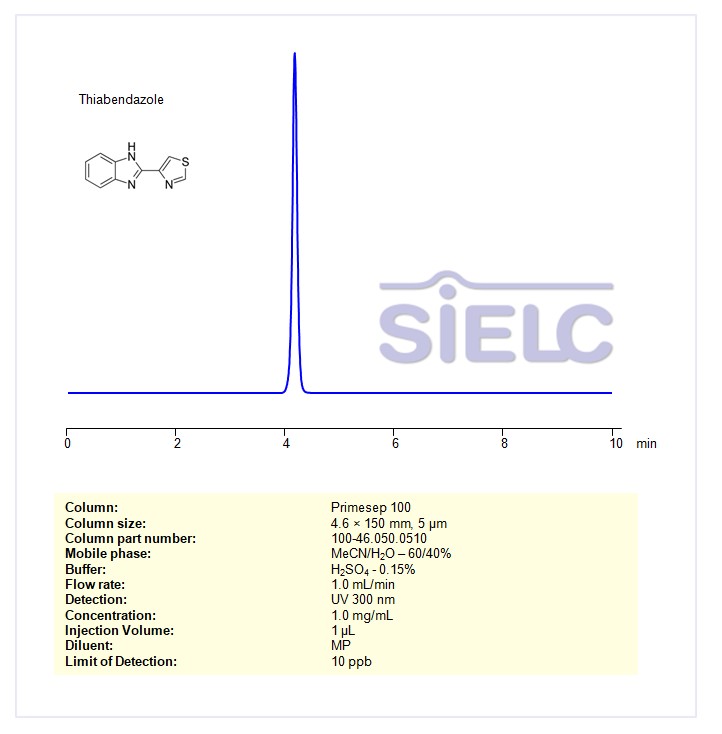
Description
· Separation type: Liquid Chromatography Mixed-mode SIELC Technologies · HPLC Method for Analysis of Thiabendazole on Primesep 100 Column
Thiabendazole is an anthelmintic and antifungal medication used to treat various parasitic worm infestations and fungal infections. It works by interfering with the energy metabolism of the parasites, effectively killing them. The drug is used in both humans and animals and can be administered orally or topically, depending on the condition being treated.
In humans, thiabendazole is commonly used to treat infections like strongyloidiasis (caused by the parasite Strongyloides stercoralis), trichinosis, and other helminthic infections. It is also sometimes used as a fungicide in agriculture to control mold, rot, and other fungal diseases in crops and fruits.
While effective, thiabendazole can cause side effects such as nausea, dizziness, and abdominal pain. It is typically prescribed when the benefits outweigh the potential risks, and the specific use and dosage depend on the patient’s condition and overall health.
Thiabendazole can be retained, separated and analyzed using a Primesep 100 mixed-mode stationary phase column. The analysis employs a gradient method with a simple mobile phase comprising water, acetonitrile (MeCN), and sulfuric acid as a buffer. This method allows for detection using UV 300 nm.
You can find detailed UV spectra of Thiabendazole and information about its various lambda maxima by visiting the following link .
Method Parameters
| Mobile Phase | MeCN – 60% |
|---|---|
| Buffer | H2SO4 – 0.15% |
| Flow Rate | 1.0 ml/min |
| Detection | UV 300 nm |
| Limit of Detection | 10 ppb |
| Class of Compounds | Herbicide |
| Analyzing Compounds | Thiabendazole |