HPLC Method for Separation of Lysine, Dilysine and Trilysine on BIST B+ Column
https://sielc.com/hplc-method-of-lysine-dilysine-trilysineChromatogram
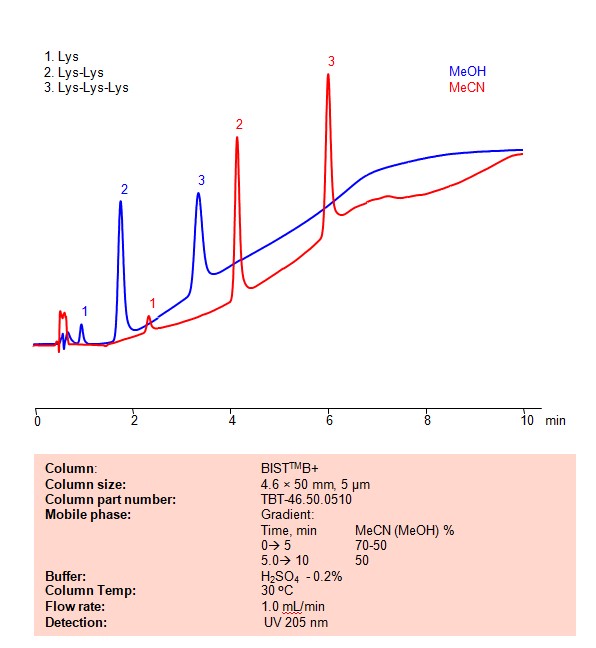
Description
· Separation type: Bridge Ion Separation Technology, or BIST™ by SIELC Technologies · HPLC Method for Analysis of Lysine , Dilysine , Trilysine on on BIST B+ by SIELC Technologies · Lysine, dilysine, and trilysine refer to compounds related to the amino acid lysine.
For all these compounds, especially dilysine and trilysine, their relevance is often in biochemical research. Scientists may study such peptides to understand cellular mechanisms, explore physiological processes, or develop new materials or medications. The specific properties of these compounds, such as their charge and their ability to participate in various biochemical interactions, can make them valuable for certain applications.
Lysine, dilysine, and trilysine can be retained, separated and analyzed on a BIST B+ mixed-mode stationary phase column using an analytical method with a simple mobile phase of water, Acetonitrile (MeCN) or Methanol (MeOH), and a sulfuric acid as a buffer. This analysis method can be detected using UV at 205 nm.
Method Parameters
| Mobile Phase | Gradient MeCN or MeOH |
|---|---|
| Buffer | H2SO4 -0.2% |
| Flow Rate | 1.0 ml/min |
| Detection | UV 205 nm |
| Class of Compounds | Amino acid |
| Analyzing Compounds | Lysine,Dilysine,Trilysine |