HPLC Method for Analysis of Tizanidine in Pharmaceutical Dosage Form
https://sielc.com/hplc-method-for-analysis-of-tizanidine-tabletsChromatogram
Description
· High Performance Liquid Chromatography (HPLC) Method for Analysis of Tizanidine
Tizanidine, marketed under the brand name Sirdalud among others, is a medication primarily used to manage spasticity, a condition where muscles are continuously contracted, causing stiffness or tightness of the muscles, interfering with normal movement, speech, and gait. It is commonly associated with conditions like multiple sclerosis and spinal cord injury.
Tizanidine works by blocking nerve impulses to the brain, relaxing the muscles and thereby relieving symptoms of spasticity.
However, tizanidine can have significant side effects, and it’s important that it is used under the supervision of a healthcare provider. Side effects can include hypotension (low blood pressure), dry mouth, weakness, drowsiness, and in some cases, liver injury.
In addition, tizanidine can interact with other medications, including certain antidepressants, antibiotics, and blood pressure medications. Therefore, it’s important to tell your healthcare provider about any other medications you’re taking.
Lastly, tizanidine can cause physical dependence, and stopping it suddenly can result in withdrawal symptoms. It should be discontinued gradually under a doctor’s supervision.
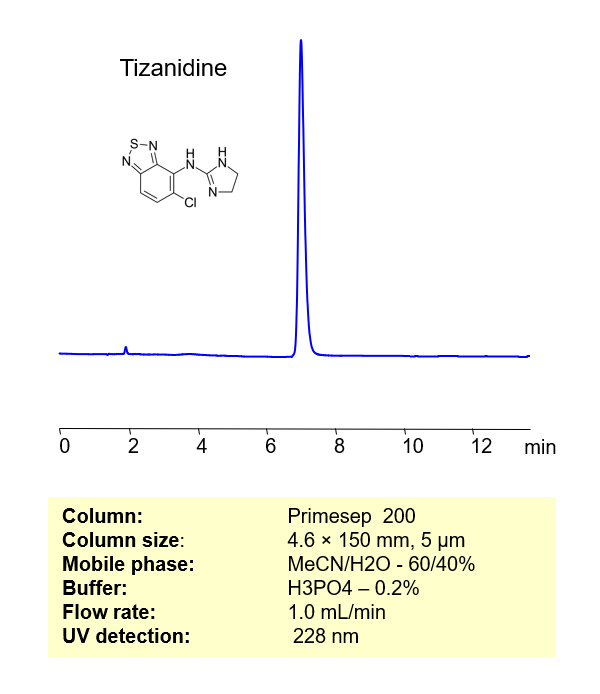
This compound can be retained and analyzed on a mixed-mode Primesep 200 column with a mobile phase consisting of water, Acetonitrile (MeCN), and phosphoric acid (H3PSO4). This analytical method can be UV detected at 228 nm with high resolution and peak symmetry.
Method Parameters
| Mobile Phase | MeCN/H2O – 60/40% |
|---|---|
| Buffer | H3PO4 – 0.2 % |
| Flow Rate | 1.0 ml/min |
| Detection | UV, 228 nm |
| Class of Compounds | Drug, Basic, Hydrophobic, Ionizable |
| Analyzing Compounds | Tizanidine |