HPLC Method for Analysis of Caffeine, Theophylline and Theobromine on Primesep SB Column on Alltesta™
https://sielc.com/hplc-method-for-analysis-of-caffeine-theophylline-theobromine-2Chromatogram
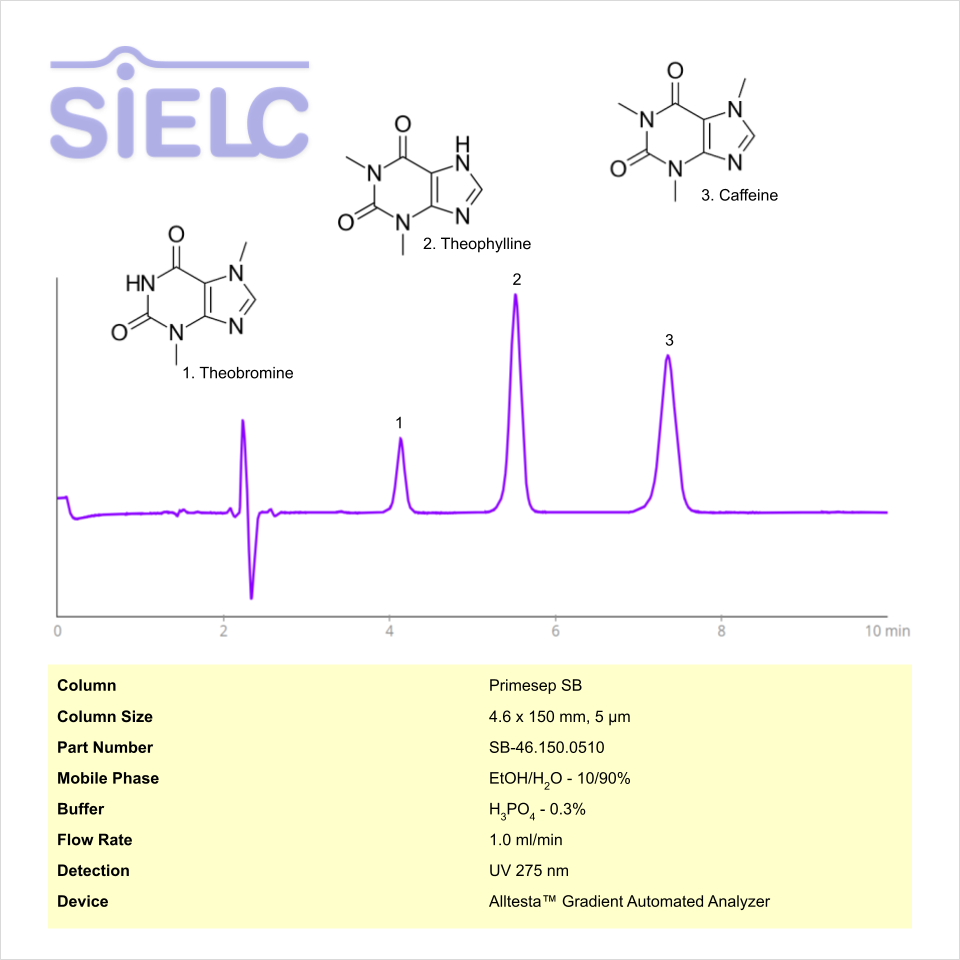
Description
High Performance Liquid Chromatography (HPLC) Method for Analysis of Caffeine , Theophylline , Theobromine
Caffeine is a natural stimulant and methylxanthine alkaloid. with the molecular formula C 6 H 10 N 4 O 2 . Caffeine can be found in a variety of plants, including tea, coffea, cocoa, kola nuts, and guarana. Ingestion of it can increase alertness and cognitive function. It can also cause worsening anxiety, heart palpitations, and headaches.
Theophylline is a methylxanthine compound with the molecular formula C 7 H 8 N 4 O 2 . It is a caffeine metabolite and is often used in forensic analyses. Besides analytical use, it is often used in treating respiratory conditions.
Theobromine is a methylxanthine alkaloid with the molecular formula C 7 H 8 N 4 O 2 . It is a derivative of caffeine. It can be found in many foods, including chocolate and tea. Despite that, it is toxic to dogs.
You can find detailed UV spectra of Caffeine and information about its various lambda maxima by visiting the following link.
You can find detailed UV spectra of Theophylline and information about its various lambda maxima by visiting the following link.
You can find detailed UV spectra of Theobromine and information about its various lambda maxima by visiting the following link
Method Parameters
| Mobile Phase | EtOH- 10% |
|---|---|
| Buffer | Phosphoric Acid |
| Flow Rate | 1.0 ml/min |
| Detection | UV 275 nm |
| Class of Compounds | Alkaloid |
| Analyzing Compounds | Caffeine,Theophylline,Theobromine |