HPLC Method for Analysis of Heme B in Blood Samples on Newcrom R1 Column
https://sielc.com/hplc-determination-of-heme-bChromatogram
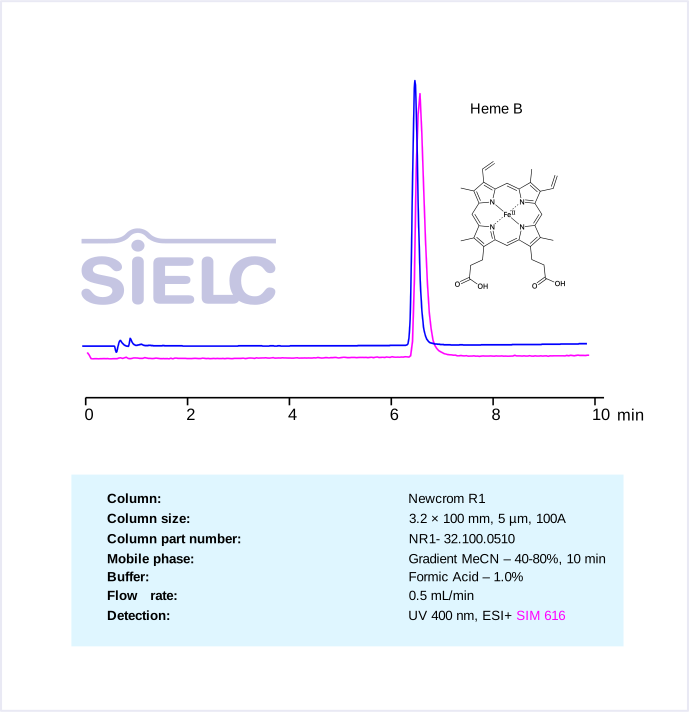
Description
· Separation type: Liquid Chromatography Reverse -phase SIELC Technologies · HPLC Method for Analysis of Heme B in Blood Samples on Newcrom R1 Column
Heme B, also known as protoheme IX, is a specific type of heme and falls under the class of porphyrin compounds. It is an iron-containing compound that is vital for various biological functions, primarily as a component of hemoglobin and myoglobin, which are essential for oxygen transport and storage in the body. Additionally, heme B is found in certain enzymes such as cytochromes, where it plays a key role in electron transport and redox reactions.
Protoheme can be retained, separated and analyzed using a Newcrom R1 reverse-phase stationary phase column. The analysis employs a gradient method with a simple mobile phase comprising water, acetonitrile (MeCN), and formic acid as a buffer. This method allows for detection using UV 400 nm.
You can find detailed UV spectra of Protoheme and information about its various lambda maxima by visiting the following link .
Method Parameters
| Mobile Phase | Gradient MeCN- 40-80%, 10 min |
|---|---|
| Buffer | Formic Acid – 1% |
| Flow Rate | 0.5 ml/min |
| Detection | UV 400 nm, ESI+ SIM 616 |
| Class of Compounds | Porphyrins |
| Analyzing Compounds | Protoheme |