HPLC Method for Analysis of beta-Carotene on Lipak Column
https://sielc.com/hplc-analysis-of-beta-carotene-on-lipakChromatogram
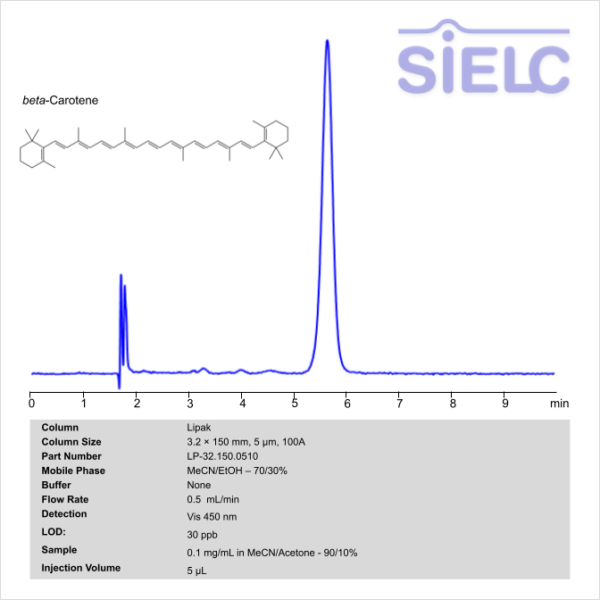
Description
· High Performance Liquid Chromatography (HPLC) Method for Analysis of beta-Carotene
beta-Carotene , also written as β-Carotene , is a pigment with the chemical formula C 40 H 56 . It is found primarily in fungi, plants, and fruit. Especially high amounts of it are found in carrots, pumpkins, spinach, and sweet potatoes. In dietary contexts, it is used as a pro-vitamin, as it converts to retinol in the body. In fact, it is the worldwide primary dietary source of provitamin A and is the best known provitamin a carotenoid. You can find detailed UV spectra of beta-Carotene and information about its various lambda maxima by visiting the following link.
beta-Carotene is analyzed using a Lipak stationary phase column under isocratic conditions with a mobile phase composed of acetonitrile (MeCN) and ethanol. Detection is performed by visible (Vis) absorbance detection
Method Parameters
| Mobile Phase | MeCN/EtOH – 70/30% |
|---|---|
| Buffer | None |
| Flow Rate | 0.5 ml/min |
| Detection | Vis 450 nm |
| Limit of Detection* | 30ppb |
| Class of Compounds | Pigment |
| Analyzing Compounds | beta-Carotene |