HPLC Separation of Epinephrine and Related Impurities
https://sielc.com/Application-HPLC-Separation-of-Epinephrine-and-Related-ImpuritiesChromatogram
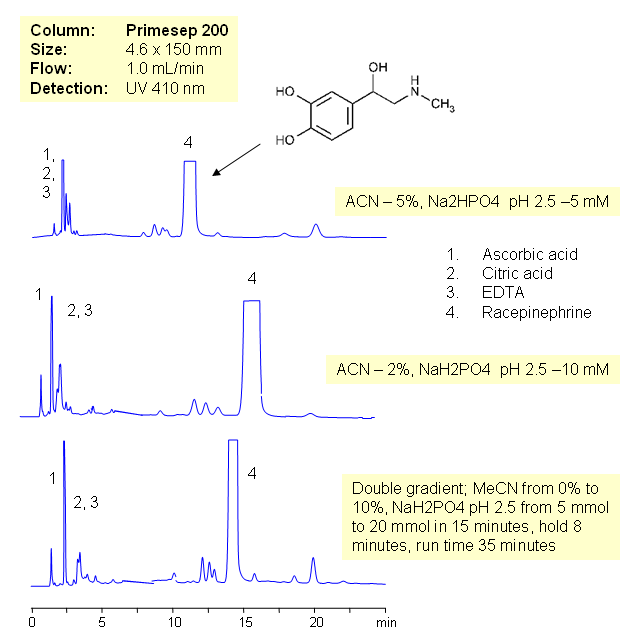
Description
Epinephrine (also referred to as adrenaline) is a hormone and neurotransmitter. It is a catecholamine, a sympathomimetic monoamine derived from the amino acids phenylalanine and tyrosine. Epinephrine is polar basic compounds and it is retained on mixed-mode cation exchange columns without ion-pairing reagent. Epinephrine is retained by weak reversed phase and strong cation-exchange mechanisms. Formulations for epinephrine might have citric and ascorbic acid and EDTA. These three compounds are not retained by cation-exchange or reversed-phase mechanisms and elute in the void. Current HPLC method can be used for quantitation of epinephrine and recepinephrine (recemate) in various compositions. Epinephrine and related impurity can be monitored by UV, ELCD/MS, ELSD or Corona CAD. Corresponding buffer is required for each detection technique.
Method Parameters
| Mobile Phase | MeCN/H2O |
|---|---|
| Buffer | NaH2PO4 |
| Flow Rate | 1.0 ml/min |
| Detection | 410 |
| Class of Compounds | Ions, Hydrophilic, Ionizable |
| Analyzing Compounds | Ascorbic acid, Citric acid, EDTA, Racepinephrine |