HPLC Method for Analysis of Trans – Resveratrol on Newcrom R1 Column
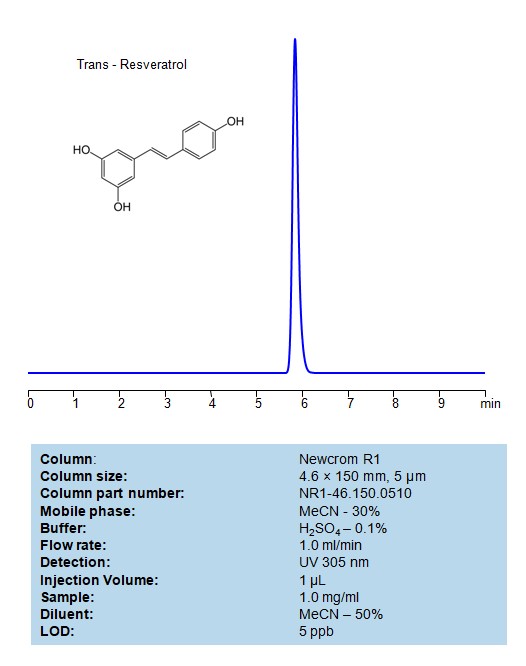
Separation type: Liquid Chromatography Reversed-phase
Trans-resveratrol is a natural compound that belongs to a class of polyphenolic compounds called stilbenes. Polyphenols are organic compounds found in plants and are known for their antioxidant properties. Resveratrol is specifically found in various plants, including the skin of red grapes, peanuts, and certain berries.
Isomers: Resveratrol exists in two main isomeric forms: trans-resveratrol and cis-resveratrol. The trans form is the more stable and biologically active isomer.
Antioxidant Properties: Resveratrol is known for its antioxidant activity, which means it can help neutralize free radicals in the body. Free radicals are unstable molecules that can contribute to oxidative stress and damage cells.
Potential Health Benefits: Resveratrol has been studied for its potential health benefits, including its role in cardiovascular health, anti-inflammatory effects, and potential anti-cancer properties. Some research suggests that resveratrol may have cardioprotective effects and could contribute to overall health.
Found in Red Wine: Red wine is often cited as a dietary source of resveratrol, as the compound is present in grape skins, and red wine is made by fermenting grape skins with the seeds and stems. However, the concentration of resveratrol in red wine is relatively low, and it would be challenging to consume enough through wine alone to achieve potential health benefits.
Methodenparameter
| Column | Newcrom R1, 4.6 x 150 mm, 5 µm, 100 Å, dual ended |
|---|---|
| Mobile Phase | MeCN – 30% |
| Buffer | H2SO4 – 0.1% |
| Flow Rate | 1.0 mL/min |
| Detection | UV 305 nm |
| Sample | 1 mg/ml |
| Injection Volume | 1 µL |