HPLC Method for Analysis of Hemin on Primesep 100 Column
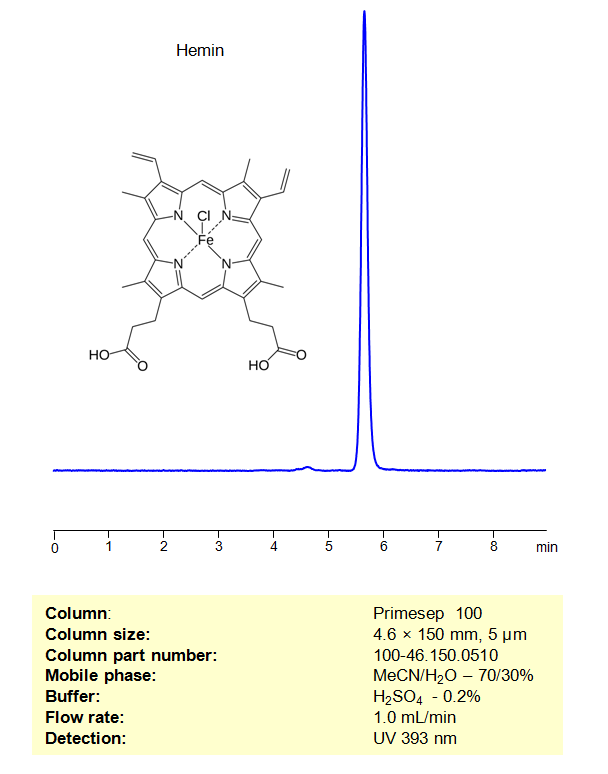
Separation type: Liquid Chromatography Mixed-mode
Hemin is an iron-containing molecule related to hemoglobin and myoglobin, proteins that carry oxygen in blood and muscle, respectively. Specifically, hemin is the ferric (Fe^3+) form of protoporphyrin IX.
Structure: Hemin consists of a protoporphyrin IX ring with a centrally coordinated ferric (Fe^3+) ion. This structure is similar to the heme group found in hemoglobin, myoglobin, and various other heme-containing proteins. The difference between heme and hemin is the oxidation state of the iron and the type of ligands it is bound to.
Biological Role: While hemin itself isn’t a major biological molecule, its close relative, the heme group, plays a critical role in various biological processes. Heme is essential for oxygen transport in hemoglobin and myoglobin and is also a key component of many other proteins and enzymes.
Clinical Relevance: Hemin is used therapeutically as “heme therapy.” It is administered to treat acute porphyria attacks. Porphyrias are a group of rare disorders resulting from a buildup of natural chemicals that produce porphyrin in your body. Administering hemin can help reduce the production of porphyrins.
Laboratory Use: Hemin can be used to induce the expression of heme-oxygenase-1 (HO-1), an enzyme that degrades heme, leading to antioxidant and anti-inflammatory effects. Additionally, in microbiology, hemin is used as a factor to grow certain bacteria like Haemophilus influenzae on chocolate agar.
Methodenparameter
| Column | Primesep 100, 4.6 x 150 mm, 5 µm, 100 Å, dual ended |
|---|---|
| Mobile Phase | MeCN – 70% |
| Buffer | H2SO4 – 0.2% |
| Flow Rate | 1.0 mL/min |
| Detection | UV 393 nm |
| Sample | 1 mg/ml in 0.01M NaOH |